Showing posts with label tragedy. Show all posts

Saturday, June 13, 2026

Bao Ninh's THE SORROW OF WAR (Tr Frank Palmos & Phan Thanh Hao, Narr James Langton)

Kien himself would have been dead long ago if it had not been for the sacrifice of others; he might even have killed himself to escape the psychological burden of killing others. He had not done that, choosing instead to live the life of an antlike soldier, carrying the burden of every underling.
I've known more than a few United States veterans of the Vietnam War, listened to them talk about survivors' guilt and how that can color absolutely every aspect of their post-war lives, and that's hard enough for me to imagine -- but what if you were also living out that life in the same territory where you took your wounds, watched your buddies and rivals die? Which was also where you grew up, first fell in love, buried your grandparents or parents? Comparing these experiences is, of course, pointless. So I won't say one is worse than another, but, well, the most emotionally harrowing parts of the only novel I've read about this war from the perspective of the Vietnamese, Bao Ninh's The Sorrow of War, take place on former battlefields long after the Yanks went home.

Our point of view character, Kien, has, like Bao Ninh himself, finally concluded, after years of failing to re-integrate into daily life in his home city, the much-revived and gentrified Hanoi, that the only real reason he has been forced,  by circumstance and conscience, to carry on, is to record his experiences for posterity. And so he has done, and is doing, for The Sorrow of War isn't just about his experiences of preparation, combat and aftermath, but also of remembering and writing what will essentially become this very novel. The one can be as harrowing as the other, as anyone with PTSD* can tell you. And as difficult to convey in words!

The Sorrow of War, like Slaughterhouse Five, pulls its narrator character unstuck from time, though without any of the (possibly imaginary) relief of S5's science fictional frame narrative. We see Kien on an MIA detail, retrieving bodies after hostilities have ended, in various medical camps recovering from injuries, taking damage from explosions of buildings, trains, planes overhead, with his childhood sweetheart as a teenager, misunderstanding his father as an even younger teen, rescuing one woman from assault and likely rape, failing to rescue another one, encountering still another woman he last saw as a worshipful little girl watching him bravely march off to war with her adored big brother only to find her forced into prostitution as an adult... and Bao Ninh via Kien is there to make sure we feel every second of Kien's pain, guilt, concern, helplessness, rage, love, fear, disappointment and, yes, immaturity and emotional stuntedness. War forces one to grow up too fast in some ways, and stops him from growing up at all in others. We do not see Kien's attitude about women evolve much beyond what it was when he was rolling around in the grass with his gorgeous first love at the age of 17. But he learns every other lesson imaginable, and doesn't shy from showing us that even from his perspective as a lonely middle aged man, he still has some growing to do.

All of this is conveyed with considerable introspection and tenderness by narrator James Langton, whose voice I associate more with the colder and more empirical narratives of science fiction writers like Adam Roberts than with the emotional scenes this book demanded. I mean to say, here, that Langton would not have been my choice for The Sorrow of War but that I would have been wrong. He hits the right note every scene, and even when he sounds like he's at his most detached, still also manages to sneak in subtle hints that it's all an act. I still think I would have rather read this one in print, but I'm poor and my beloved public library only has the audio edition, so that's what I got -- but I did not suffer for it. At least, not in terms of quality.

I suffered in lots of other ways, of course. All of them the ways that fiction intends. And I also got to visit, in my minds eye and through the beautiful words of Bao Ninh, Frank Palmos and Phan Thanh Hao, a beautiful country that I'll never see with the eyes of my body -- at both its best and its worst. Wow.

*And to this I can relate, in my different but still pretty fucking intense way. 

Saturday, July 31, 2021

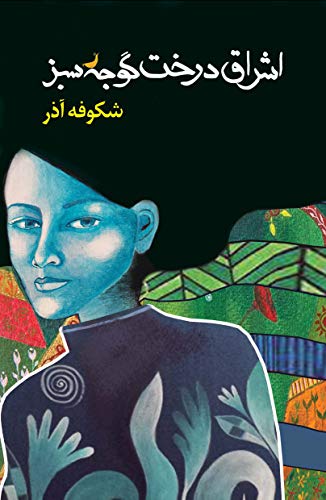
Shokoofeh Azar's THE ENLIGHTENMENT OF THE GREENGAGE TREE (tr. by Anonymous)


There's a scene towards the middle of Shokoofeh Azar's surreal Iranian tragedy, The Enlightenment of the Greengage Tree, in which the family that is the novel's focus sets to work filling 400-page notebooks with their best recollections of the contents of the hundreds and hundreds of books that just got destroyed in a Revolutionary attack on their household. Quickly, before they forget, the parents and their three children are to write down summaries, memorable quotations, impressions, of every book the family owned: novels in many languages, poetry, journals, treatises on science and math, histories, scripture. It doesn't matter if they don't remember much, doesn't matter if something is incomplete or inaccurate, doesn't even matter if the text from, say, Romeo and Juliet suddenly turns into a passage from Will Durant about the city-state of Verona without warning. What matters is that everybody keeps writing, fills the pages. Better to have incoherent fragments of their lost treasures than nothing of them at all. For all they know, these fragments they're generating might be all that will ever survive of these works they've treasured; they've been living in happy isolation from the bad old outside world.

I think this scene is key to experiencing The Enlightenment of the Greengage Tree, because it promotes the understanding that what one is reading is actually one of these 400-page notebooks, in which the writer has attempted to provide a deeply felt family history but has also allowed memory, fantasy, and a deep love of Iranian folk culture and history to lead her down the garden path rather a lot. Thus an account of an actual (usually unbearably tragic) event in the family's life can drift into a magical realist fantasia of jinn and fireflies and a pilgrimage of ghosts who collectively shed enough tears to cause a flash flood in Tehran. 

All in almost unbearably gorgeous prose, so beautiful I want to hug this translator but I can't because their identity is a secret lest reprisals come their way, because Iran.

Of course, another possibility as to the "actual" authorship of the text we're reading suggests itself quite late in the book. To that point, we've understood ourselves to have been reading some kind of testimony by Bahar, one of the family's two daughters, who was burned to death at age 13 in 1979 when the Islamic revolution really took hold of Iran and of this family in the form of a fanatical attack on their household and especially the father's workshop where he handcrafted traditional musical instruments called tars. Bahar was in there helping him and learning the art when a group of angry fundamentalists broke in and burned the whole place down, with Bahar still in it. The father, Hushang survives, bitter but not broken, in part because Bahar's ghost remains with the family even as Hushang, wife Roza, and surviving children Sohrab and Beeta move from the palatial Tehran mansion their extended family has owned for over 200 years out to a remote village that isn't even served by a proper road.

The Revolution isn't done with them, though. Oh no. While the family enjoys long periods of relative prosperity, if not contentment, in the new home they establish on a hilltop above a podunk village (establishing in the process an incredible garden Azar and her translator describe so vividly that it kind of kills me that I can't ever actually visit it), even here they are not safe from extremism, the more or less organized forces of which inflict tragedy after tragedy on the family and on the village that has taken them in, until at one point, decades after the fire that destroyed his workshop and killed Bahar, Hushang, believing himself a sole survivor now, returns to Tehran and gets swept up by a new gang of fantatics making examples of people who dare to have in their possession forbidden things like CDs of popular Iranian music, and never mind that it's not illegal yet, buster.

They set him to writing a confession of all of his sins and his first draft, we are given to understand, reads a whole lot like what we've been reading, ghosts and jinn and mysterious pilgrimages and magical Zoroastrian treasure and women giving birth to goldfish and all. Has it been Bahar or Hushang telling us this story, really? But then, does it matter?

In the process what we get most of all is a meditation on memory, loss, and how forgetfulness* can be a temptation as much as a tragedy. The entire village, at one point, discovers that their sole literate citizen (before the coming of our hyper-literate protagonist family) isn't actually so literate. Nor were his predecessors, meaning that the written records of their family histories they've trusted him to interpret for them are pure fantasy. What follows is an excited outburst of liberation; everybody feels free to be brand new people and start right over, hooray! But then the government's literacy corps finally makes it to their little town and their tabulas are no longer rasa -- but potentially, because they're going to be rewritten by the Regime, rather than truly understood by their inheritors.

Author Shokoofeh Azar knows whereof she writes here, I imagine, having taken political asylum in Australia in 2011. This is her first work to be translated into English, but I really hope it's not her last. Her criticism of a regime that to this day still makes things incredibly difficult for artists of every kind (see also the Iranian film industry, hideously hampered by censorship but still managing to create works of intimate and deeply felt beauty) is hard to miss for all that it's drenched in folklore and fantasy, so I wouldn't be surprised if she's about as well regarded in her homeland as Salman Rushdie is, so Australia, please keep her safe!  And I hope her translator stays safe, too, wherever and whoever they are.

So in sum, The Enlightenment of the Greengage Tree is one of the saddest books I've read since, well, since the last Persian book I read in translation, The Book of Collateral Damage! This is, of course, far too small a sample size to make generalizations from but nonetheless, whenever I hear a recommendation for a book that's been translated from the original Farsi, I'm going to put up my emotional dukes, just in case.

*Which, after a fashion, is the real nature of the "enlightenment" of the title, first experienced after a compulsive climb to the top of the titular greengage tree by the family's mother, Roza, described by Bahar-or-Hushang later on when, down from the tree and pondering her experience "she came to the same conclusion she had reached that day at precisely 2:35 P.M.: it’s not worth it, life isn’t what she had thought. Life is precisely that which she and others were prodigiously killing—the moment itself."

Monday, May 18, 2020

Best Translated Book Nominees: Christos Iknonomou's GOOD WILL COME FROM THE SEA (translated by Karen Emmerich)

Blogger's note: this is my first read off the long list of books nominated for this year's Best Translated Book Award. I'm going to see how many of them I can read before the short list and eventual winner are announced. They all just sounded too interesting not to try out!

"Back then they sent people to the islands by force, now we come here on our own."

The four linked stories that comprise Christos Ikonomou's  Good Will Come From the Sea are set on a fictional Greek island that, like the rest of Greece (and the rest of the world), is still feeling the impacts of the 2008 financial crisis, and of earthquakes that have been wrecking Athens. But that description, as bland as this book cover, doesn't begin to convey those impacts, which are not abstractly economical (though they are that, too) as much as they are very, very human, in the form of a new kind of migration pattern that proves the source of enough different kinds of agonizing tension to power many more than just these four excellent stories, and not just, as the pulled quote above conveys, because earlier in Greece's history the Aegean islands were where repressive governments sent uncooperative citizens to contemplate the error of their ways with a little help from jailers and torturers.

People who have lived on the island for generations witnessed that and let it form their society and grew accustomed to it, but now are suddenly having to deal with a new, semi-voluntary influx of people who, again, are just as Greek as they are, but because they come from Athens and grew up in higher socioeconomic classes above the natives' own, are referred to behind their backs and, in hostilities (which are many) to their faces as "Foreigners." The "Foreigners", in turn, refer to the natives as "Rats", perhaps alluding to the island's weird cave-riddled geography that the natives know intimately and the Athenians can barely navigate? If I'm being charitable here? Which nobody in these stories is, neither the Foreigners (not even, much, to each other) nor the Rats, all of whom are now trapped together by circumstances but none of whom are adjusting especially well.

All four stories are from the perspective of the in-migrants from Athens, who have left behind broken lives of relative privilege and prosperity and are still in shock but striving to rebuild in a new place... and finding it very, very difficult. Their prior values and cherished illusions are getting shown up as laughable and flimsy, they're facing real privation for the first time in their lives, and their support networks are disintegrated or diminished. They're still perservering, for now, but as each story opens, they're facing crises that may break them. And, I'll warn you right now, readers: don't come to these stories looking for happy endings or neat resolutions. Mysteries don't get solved. Resolutions may be fulfilled beyond the confines of a narrative but you don't get to see it.

But you do get to explore the interiority, and hidden resilience, of some very interesting characters as they struggle with the disappearance of loved ones, with vandalizing assaults on barely-started enterprises, with the question of the responsibility to act on knowledge they wish they didn't have about harm happening to a helpless other. As the protagonist of my favorite of the four, "Kill the German", a paraplegic who lost the use of his legs trying to blow up a sex shop and now uses mobility aids on an island not at all designed for his kind, observes to himself as he frets over the fate of a young girl pimped out by her family to a rich old man:
The world is constructed in such a way as to deprive each of us of the possibility of doing any personal good. No, that's not right. Let's take it from the top. Ready? Okay. The world is constructed in such a way as to relieve each of us of the responsibility of doing any personal good. We are all free to do bad in a thousand ways, but good is always someone else's affair.
We're all dealing with this right now especially, wherever we are in the world, eh? Only a lot of us have discovered that the government/social safety net/network of private charities we've always counted on to mitigate the sob stories the daily news brings us was never so robust as we thought, even in the free and prosperous West, and it maybe really is up to us to help each other out directly, even though we risk a lot in doing so.*

As we wring our hands at what the COVID-19 virus has done to and, more importantly, revealed about our world (though yeah, lots of us already knew from first-hand experience that life, liberty and the pursuit of happiness were very unevenly distributed), I feel like the characters, both Foreigners and Rats, from Ikonomou's stories would laugh at us, bitterly. Which is to say that these stories feel uncomfortably prophetic, especially for readers like me who live in remote places to which everybody else (*cough* Neil Gaiman *cough*) dream of or already have active plans for retreating, and have already seen the effects of decades in-migration by people who visited here once and decided to retire here but who are used to or demand "better" than what we have to offer, which is to say I was disposed to identify perhaps more with the Rats (none of whom really get developed as characters in these stories) than with the Foreigners, but Ikonomou is so damned good that he made me care about the Foreigners -- which is one of the big things that literature, that art, is for, isn't it?**

"If you're in need, if you are on the outside, you're a foreigner everywhere." another character observes. And your turn to be one might be next, is the not-so-subtle message here. So why not start being decent to one another now? Because here's the alternative, and it ain't pretty. 

So while these tales of people facing hostility, subterfuge, corruption, distrust, envy, sabotage, from people who are supposed to share the same culture as themselves, more or less, awaken empathy, they also are every bit as disturbing as any of, say, William Gibson's recent fictions of his post-Jackpot world.*** Passages observing the effect of long-term unemployment may soon come to feel a bit too familiar to a lot of people who have taken gainful work for granted , for instance. So I really can't decide if this is bad pandemic reading or good, but it's possibly the best pandemic reading? Because it is full of some sweet and amusing moments, too, like my favorite, which takes place in a new family-run taberna:
One of the ladies points at the light fixture on the ceiling. And the kid turns bright red and says no, no, no lamp, lamb, lamb, you know baaa, baaa. The old ladies start laughing and say okay okay and Petrus picks at the menus and comes over all in a huff and asks me who wrote the English menu.
And some frankly lovely prose, as when a man in search of his missing son (delivered into the employ of a shady local syndicate on his orders, no ifs ands or buts) pauses and observes the sea as he climbs to the top of the island's ridge to get a better look around: "The waves tipped with white like frothy eyebrows over the water's countless blind eyes" and wouldn't we all just kill to have sentences like that published under our names? And of course, how much of that is Ikonomou and how much is translator Karen Emmerich?

One bit that I think is mostly Emmerich comes as my paraplegic friend contemplates some old wisdom that I get from Jorge Luis Borges but think he probably got from Bishop Berkley or somebody, but phrased as succinctly and elegantly as I've yet seen in English: "Fathers and mirrors should be hated to an equal degree because they alone have the ability to make people multiply." Maybe it's really economical in the original Greek, too, but I'm thinking this is the translator's hand showing, gracefully.

So, as I said on Twitter the other day, if the rest of the books on the long list for Best Translated Book are anywhere near this good, I'm going to have an emotionally challenging but very satisfying set of reads ahead of me. Gimme!

*And, of course, in the U.S. and, it appears, the U.K. especially, we're also dealing with sizeable populations of people hell-bent on preventing us from helping each other, sometimes with the threat of deadly force.
**Not that my foreigners are going to be in quite the shape of these Athenian migrant-refugees, of course. I live in the Billionaire Wilderness.
***He seems to be buried in tweets whining to him that he predicted our current plight too damned well and maybe wasn't writing fiction but is some kind of pre-cog wizard. At least no one is mocking him for not foreseeing cellphones anymore?