Saturday, July 31, 2021

Shokoofeh Azar's THE ENLIGHTENMENT OF THE GREENGAGE TREE (tr. by Anonymous)


There's a scene towards the middle of Shokoofeh Azar's surreal Iranian tragedy, The Enlightenment of the Greengage Tree, in which the family that is the novel's focus sets to work filling 400-page notebooks with their best recollections of the contents of the hundreds and hundreds of books that just got destroyed in a Revolutionary attack on their household. Quickly, before they forget, the parents and their three children are to write down summaries, memorable quotations, impressions, of every book the family owned: novels in many languages, poetry, journals, treatises on science and math, histories, scripture. It doesn't matter if they don't remember much, doesn't matter if something is incomplete or inaccurate, doesn't even matter if the text from, say, Romeo and Juliet suddenly turns into a passage from Will Durant about the city-state of Verona without warning. What matters is that everybody keeps writing, fills the pages. Better to have incoherent fragments of their lost treasures than nothing of them at all. For all they know, these fragments they're generating might be all that will ever survive of these works they've treasured; they've been living in happy isolation from the bad old outside world.

I think this scene is key to experiencing The Enlightenment of the Greengage Tree, because it promotes the understanding that what one is reading is actually one of these 400-page notebooks, in which the writer has attempted to provide a deeply felt family history but has also allowed memory, fantasy, and a deep love of Iranian folk culture and history to lead her down the garden path rather a lot. Thus an account of an actual (usually unbearably tragic) event in the family's life can drift into a magical realist fantasia of jinn and fireflies and a pilgrimage of ghosts who collectively shed enough tears to cause a flash flood in Tehran. 

All in almost unbearably gorgeous prose, so beautiful I want to hug this translator but I can't because their identity is a secret lest reprisals come their way, because Iran.

Of course, another possibility as to the "actual" authorship of the text we're reading suggests itself quite late in the book. To that point, we've understood ourselves to have been reading some kind of testimony by Bahar, one of the family's two daughters, who was burned to death at age 13 in 1979 when the Islamic revolution really took hold of Iran and of this family in the form of a fanatical attack on their household and especially the father's workshop where he handcrafted traditional musical instruments called tars. Bahar was in there helping him and learning the art when a group of angry fundamentalists broke in and burned the whole place down, with Bahar still in it. The father, Hushang survives, bitter but not broken, in part because Bahar's ghost remains with the family even as Hushang, wife Roza, and surviving children Sohrab and Beeta move from the palatial Tehran mansion their extended family has owned for over 200 years out to a remote village that isn't even served by a proper road.

The Revolution isn't done with them, though. Oh no. While the family enjoys long periods of relative prosperity, if not contentment, in the new home they establish on a hilltop above a podunk village (establishing in the process an incredible garden Azar and her translator describe so vividly that it kind of kills me that I can't ever actually visit it), even here they are not safe from extremism, the more or less organized forces of which inflict tragedy after tragedy on the family and on the village that has taken them in, until at one point, decades after the fire that destroyed his workshop and killed Bahar, Hushang, believing himself a sole survivor now, returns to Tehran and gets swept up by a new gang of fantatics making examples of people who dare to have in their possession forbidden things like CDs of popular Iranian music, and never mind that it's not illegal yet, buster.

They set him to writing a confession of all of his sins and his first draft, we are given to understand, reads a whole lot like what we've been reading, ghosts and jinn and mysterious pilgrimages and magical Zoroastrian treasure and women giving birth to goldfish and all. Has it been Bahar or Hushang telling us this story, really? But then, does it matter?

In the process what we get most of all is a meditation on memory, loss, and how forgetfulness* can be a temptation as much as a tragedy. The entire village, at one point, discovers that their sole literate citizen (before the coming of our hyper-literate protagonist family) isn't actually so literate. Nor were his predecessors, meaning that the written records of their family histories they've trusted him to interpret for them are pure fantasy. What follows is an excited outburst of liberation; everybody feels free to be brand new people and start right over, hooray! But then the government's literacy corps finally makes it to their little town and their tabulas are no longer rasa -- but potentially, because they're going to be rewritten by the Regime, rather than truly understood by their inheritors.
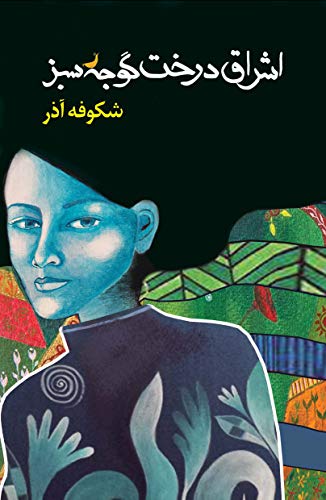
Author Shokoofeh Azar knows whereof she writes here, I imagine, having taken political asylum in Australia in 2011. This is her first work to be translated into English, but I really hope it's not her last. Her criticism of a regime that to this day still makes things incredibly difficult for artists of every kind (see also the Iranian film industry, hideously hampered by censorship but still managing to create works of intimate and deeply felt beauty) is hard to miss for all that it's drenched in folklore and fantasy, so I wouldn't be surprised if she's about as well regarded in her homeland as Salman Rushdie is, so Australia, please keep her safe!  And I hope her translator stays safe, too, wherever and whoever they are.

So in sum, The Enlightenment of the Greengage Tree is one of the saddest books I've read since, well, since the last Persian book I read in translation, The Book of Collateral Damage! This is, of course, far too small a sample size to make generalizations from but nonetheless, whenever I hear a recommendation for a book that's been translated from the original Farsi, I'm going to put up my emotional dukes, just in case.

*Which, after a fashion, is the real nature of the "enlightenment" of the title, first experienced after a compulsive climb to the top of the titular greengage tree by the family's mother, Roza, described by Bahar-or-Hushang later on when, down from the tree and pondering her experience "she came to the same conclusion she had reached that day at precisely 2:35 P.M.: it’s not worth it, life isn’t what she had thought. Life is precisely that which she and others were prodigiously killing—the moment itself."

Wednesday, June 24, 2020

Best Translated Book Nominees: Ma Jian's CHINA DREAM (Translated by Flora Drew)

I never could have imagined Billy Pilgrim* as a moderately powerful bureaucrat in 21st Century People's Republic of China, but Ma Jian sure did. And why do we read international fiction if not to be surprised once in a while by weirdness like that?
But our hero, Ma Daode, is not unstuck in time because of aliens from outer space, but because his own greatest task is bringing about the state of affairs he is experiencing for everyone! As head of the China Dream bureau, he is tasked with a combination of propaganda and technological compulsion that will bring all of Chinese society (and eventually all of humanity) into a state of literally all dreaming current leader Xi Xinping's dream of harmony and homogeneity for China, both in daily life and during actual REM sleep. It's a terrifying idea that Ma Jing confronts here, and he does so bravely and with that most potent of dissident defenses, ridicule. 

China Dream does not concern itself with how a chip implanted into people's brains to over-write their dreams and memories with a collective one might work or be developed -- indeed, our hero eventually resorts to a decidedly non-technological means to his end -- but instead focuses on Director Ma, the deeply flawed and barely competent man saddled with overseeing this dystopian project. Ma was a young Red Guard during the cultural revolution, who turned in his own parents as Rightists for very slight thoughtcrimes but is haunted more by memories of bloody factional violence within the Red Guard than by guilt over an action that led to his parents' suicide. He copes with those memories, into which the reader is drawn repeatedly without warning, through debauchery described with enough sickening detail to make China Dream a fairly unpleasant listen for people who don't appreciate sex scenes (yo!) but at least narrator David Shih didn't get too lip-smacky about it, and translator Flora Drew struck a decent balance between writing erotica and clinically descriptive porn, so while I wanted a shower after each of these scenes I didn't also wish for some kind of memory educating soup to scrub them out of my brain.

But boy, do I wish Drew, who is Ma Jian's partner in life, could have worked on him about how he wrote his female barely-characters, most of whom are Director Ma's mistresses. As depicted here, they are uniformly two-dimensional and single-minded in their pursuit of this gross old man's affections. I'm sure this is at least partly meant as a commentary on power dynamics, but such a commentary would be even more effective if the women in the story got to be people, and got to talk about something besides their moistness. Especially since narrator Shih gave them uniformly artificial and breathy Female Speech Patterns. Yuck.

The scenes from Director Ma's memories are, however, uniformly brilliant, harrowing and nightmarish and vivid; Ma is a fully realized character whose story is compelling and serves as a scathing indictment of totalitarianism and its ultimate logical ends, of the cost in ordinary lives and ordinary dreams the pursuit of this exacts, and the ridiculousness of the equally ordinary humans who claim to be willing to pay those costs in the pursuit of a bad dream. 

This will not be my last Ma Jia read, though likely my last audio book of his work. It's a lot harder to skip icky sex scenes in the audio medium than in text, I've found. 

*The unstuck-in-time boob-hero of Kurt Vonnegut's SLAUGHTERHOUSE-FIVE

Tuesday, June 16, 2020

Best Translated Book Nominees : Sinan Antoon's THE BOOK OF COLLATERAL DAMAGE (translated by Jonathan Wright)

Bearing the title that it does, The Book of Collateral Damage cannot be expected to be a lighthearted and cheery read, but let's take a moment to contemplate a list of the things author Sinan Antoon and translator Jonathan Wright will make you feel like crying about over its relatively short length: a fledgling bird, a carpet, a tree, a stamp album, a racehorse, a bedroom wall, an oud (an Arabian stringed instrument kind of like a lute), a cassette tape (oh my god did I blubber at The Colloquy of the Tape), a roll of film... plus, you know, various people, including a woman whose poetry survived thousands of years on a Mesopotamian tablet only to disappear in 2003 (probably ending up in Hobby Lobby's stolen hoard)...  I mean, there's evoking empathy and then there's whatever these guys do, and I'm a complete mess and unfit for company right now and I just want them to do it to me again.

The novel, written in such a profusion of incredible poetic imagery and language that I wish my Arabic was better so I could enjoy the original*, concerns two men: an academic, Nameer, who emigrated from Iraq to the United States, and Wadood, a bookseller he met on a trip back to Baghdad. Nameer's story of academic life in an adopted country is interesting enough, if kind of just a slight variant on the male narcissist writer narrative we're sick of from the likes of Updike and Irving, but is quickly and rightly subsumed by his obsession with Wadood's life's work: a catalog of person, animal and "inanimate" (I'll explain the scare quotes in a moment) object destroyed, minute by minute, in the Iraq War.** Wadood presented Nameer with a draft of this work on their first meeting, and Nameer, blown away by its beauty, tragedy and importance, wants more than anything that it be published in Arabic for the home crowd and then that he be allowed to translate it into English for a wider audience. 

Destruction also has a tablet preserved, somewhere in the netherworld. On it are written the names of everything that will be obliterated and everyone who will die. Every night I see myself flying and I read what's written and I come back to write it in my catalog.

It's not 100% clear whether this passage, like many in the book, is meant to be understood as Nameer's or Wadood's writing, but ultimately it doesn't matter; Gene Wolfe fans like me are quite accustomed to blurred narrator identities, but unlike in a Gene Wolfe book, I don't feel like the question of who is writing what is meant to be a puzzle for me to solve; the blurring is the point; the two men's experiences dovetail. One could almost see them as one man split in two by, say, a quantum event, whether or not a family home was destroyed by a bomb in war-torn Baghdad in their youth. The man who came upon the rubble as a boy became Wadood; the one who didn't escaped Iraq and became Nameer. Who didn't really escape at all, as his fixation on Wadood and his work and his encounters with a therapist make readily apparent.

Of course it's Wadood's "Colloquies" which really set this work apart. Antoon-as-Wadood does a heartbreakingly perfect job of imbuing things like walls and rolls of film with personality, memory and emotional resonance. Hints throughout point to everything named in these Colloquies having been within or at least associated with the aforementioned destroyed home, but they could just as easily have been things all over Baghdad that were destroyed in the same attack.

Anyway, like I said, I'm a wreck now, and I've got to take a break from this project (especially since the next few of the books from the Best Translated Book Award long list that I've got, I've got as audio books, and I don't consume those as rapidly as I did back when I was stuck half-blind in the attic last year). But I've still got several to go before I read the one that actually won, so keep watching this space, friends.

And give this one a look. Just have some tissues handy. And be prepared to apologize to the ones you use and throw away.

*I loved Urdu poetry the most when I was studying that language! Which I've forgotten most of in the 20-some years since I blew off my grad school research to do that! So I know I could improve my Arabic enough to open up this pleasure to me as well, but... which flavor of Arabic? 
**Peter Greenaway fans take note: if you love Greenaway's mania for lists and catalogs, this is your novel. 

Thursday, June 11, 2020

Rosemary Sullivan's STALIN'S DAUGHTER: THE EXTRAORDINARY AND TUMULTUOUS LIFE OF SVETLANA ALLELUYEVA

Some people have unbelievably strange lives, and then there's Svetlana Alleluyeva, aka Svetlana Dzhukashvilli, aka Lana Peters, aka... but better known as


Her real life, even in a bare bones outline, is weirder than any novel or movie could convey, which is to say that author Rosemary Sullivan had something of an unfair advantage as far as writing a book which would absolutely rivet its audience. As a young girl, Svetlana watched* her family disappear like characters in an Agatha Christie novel, but only later on in life learned that this was usually because they'd either angered her father or in some way posed a threat to or just annoyed one of his advisors. Usually a combination of those. When her father died his weird lingering death surrounded by people who weren't sure if they should help him, she got to watch the bizarre power struggles to succeed him and got treated as a pawn in them. She had been forbidden to marry her first love, a screenwriter who had rather glowing biopics of V.I. Lenin on his resume, because whoops, he was Jewish, but then was later allowed to marry a Jewish man (the first of many husbands; how many depends on how you count them, because some marriages were more official than others because totalitarianism). She finally got out of the U.S.S.R. only to scatter the ashes of an Indian citizen (whom she considered her fourth (?) husband but wasn't allowed to actually marry) on India's Ganges River and managed to slip her minders and sneak over to the U.S. Embassy to defect. She became a successful author and earned a lot of money with sensational but honest books but lost a lot of it in, for example, another ill-advised marriage to a member of Frank Lloyd Wright's posthumous cult. She met everyone from Isaiah Berlin to Terry Waite. She defected back to the U.S.S.R. at one point, teenaged half-American daughter in tow, because she missed the children she'd left behind in her first defection. And so on.

Sullivan gives all of this an immediacy and a felt impact largely through intimate interviews and hard-won access to enough of Svetlana's private (?) papers to be able to share Svetlana's perspective on matters in her own voice. Wisely, Sullivan foreshadows very little; if we don't already know what Stalin and his cohort were really up to from sources other than this book, we are not enlightened, in the course of the narrative, until Svetlana is. So at first Joseph Stalin is just a weirdly distant daddy whose children enjoy (?) considerable privilege but don't understand that they do because they're so insulated from the rest of society and aren't even told the truth about why certain family members (including Svetlana's own mother) aren't around anymore, and only later do we come to see him in anything like the way the rest of the world does -- and we get to share Svetlana's whiplash as her home country goes through crazed cycles of revering and reviling her father's memory, sentiments that she bears the brunt of once her father is dead, both in the U.S.S.R. and in her other homes of India, the United States and the United Kingdom. As she observes of the cult of personality around Stalin even decades after his death, "Tragically, many, even in the Gulag, continued to insist that Stalin knew nothing. It was evil advisers who were responsible.."

In the process, we get a timely reminder, as the present moment has brought many socialist ideas back to the fore, that we can't blindly trust people who espouse them to stick to them or the credo behind them. Once upon a time, Stalin and Beria and Khruschev would have agreed that eating the rich and defunding the police are good ideas, but not for the reasons that most of those now proclaiming them (myself included) generally mean them. The price of freedom is vigilance, and if a second socialist revolution ever occurs here in the West, the revolutionaries will do well to keep each other in check and remain vigilant against power grabs, ideological purity tests, authoritarianism in the guise of fairness, and any notion that ends justify means. It's really, really hard work, and I hope that we are smarter than the poor, starved, hidebound Russian populace of 1917 were and can learn from their experience. Sharing this book widely can only help.

*Ok, "watched" isn't quite so much the word as something like "noticed week's later that it had been a weirdly long time since she'd seen a person", but hey. We don't have a word for that, do we?

Wednesday, June 3, 2020

Best Translated Book Nominees: Burhan Sönmez' LABYRINTH: A NOVEL (Translated by Ummit Hussein)

I've never been less certain that the people who wrote the jacket copy for a novel read the same book that I did than in the case of Labyrinth: A Novel, my latest read from the long list for the Best Translated Book Award.*
The marketing for Labyrinth describes it variously as a crime novel and a heady political tale, but I see neither in this rather nice and moving story of a young semi-famous blues singer/songwriter/guitarist in Istanbul, Turkey who wakes up from an apparent suicide attempt with a wicked case of amnesia. Intriguing premise for a crime or political novel, right? I mean, was it a for- real suicide attempt or attempted murder? If it was really a suicide attempt, what brought this young, well off, good looking young musician to such a pass? Something terrible on his conscience to do with crime or politics because this is, you know, a crime novel? If it was a murder attempt made to look like suicide, who wanted him dead and why? Did he witness something he shouldn't? Was he a bad guy himself? Or a political dissenter the current regime in Turkey wanted quashed?

But, uh, nope. None of this really gets asked or, really, even answered in the text of the novel (and I'm a Gene Wolfe fan, so I'm used to really really having to pay attention when mysterious things get mysterious in fiction). Well, maybe a little bit about why our man, Boratin, would suddenly decide one night to exit his taxi while it was stuck in a traffic jam on the Bosphorus Bridge and jump right off said bridge to his suddenly intended death, but only a little bit. Like, nobody he asks has any idea, his therapist isn't much help, and then Boratin is more interested in figuring out what to do with his life moving forward than in solving this mystery of his past. 

The only clue we're given is that two of Boratin's favorite musicians, pre-swan dive,were Kurt Cobain (who committed suicide at age 27) and a Turkish guitar god named Yavus Çetin (who committed suicide at age 30). And yes, I looked up Yavuz Çetin and wow is he a revelation. See below where I'll link to a playlist I made for this novel.

Anyway, so unless I really, really read this one wrong (not impossible!) this is neither a heady political nor a crime story, but that's fine, you guys. Because it's a good book, a fine story, and worth reading on its own merits and not only because it will lead you to the discovery of some kickass Turkish pop music. 

Boratin as we get to know him (and he gets to know himself) via his friends and family, emerges as a very kind and generous young man who inspires considerable loyalty in his friends and bandmates and whose widowed sister really misses him and loves him devotedly even though he's not been to visit her and her son in years. There might well be something to this last bit -- why has he avoided his family for so long? -- and maybe his friends are lying to him about what he was like before the Bridge, but what about the neighborhood people who fall all over themselves to extend affection and gratitude to him when he happens by? Was he like, actually some kind of gangster or police informer or something and they're actually all scared of them?

That question, that idea, only occurs to me because of the jacket copy, I must emphasize. There is no textual evidence to support or even suggest it, no furtive glances, no signs of fear on the part of other characters, no unexplained suggestive imagery bubbling up from Boratin's subconscious... Without this crime/political designation I would have read Labyrinth as an elegant and moving account of an amnesiac coming to terms with his condition, deciding whom to trust with the truth of it, choosing how much effort he wants to put into recovering his memory, and determining his best course forward. That's more than enough for a good novel right there, and this is a good novel, especially since it also vividly depicts a place not a lot of us are ever going to experience any other way. Even if we get to 21st century Istanbul or have already been many times, we're not going to experience it the way a hot young Turkish musician is going to.

And that, my friends, is what I read for. And listen for: here's the promised playlist. Yavuz, man. Dayum.

*The winners have been announced for this, so now I know what to save for last!

Friday, May 29, 2020

Hilary Mantel's THE MIRROR AND THE LIGHT

History is always a spoiler for historical fiction, so I knew, as the virtual pages of The Mirror and the Light dwindled, that I was about to lose a beloved friend and I emotionally braced for it, but even so, I cried when it happened... in the book. Of course it really happened over 500 years ago.

Hilary Mantel definitely fills the role left empty lo these many years by the late Dame Dorothy Dunnet, and Mantel is a more than worthy successor, but she hasn't aped the mistress' achievements so much as inverted them. Dunnett wants us mystified by her heroes, guessing at their motivations and what they're going to do next, unable to penetrate their facades. Thorfinn, Lymond, Niccolo, all are observed from the outside; we get accounts of their deeds from the point of view of everbody else they encounter, spending a bit exploring the interiority of each of their friends, enemies, lovers, employers, lords. And nobody does this better than Dorothy.

This is not where she and Hilary Mantel overlap. What they share is a commitment to research and to world-building (as my friend Connor Wroe Southard explores in his latest) and an utter lack of fear of going long to create as complete a portrait of their ages and milieus as they can. Mantel just assumes a bit less erudition and command of languages on the part of her readers, is all, which can make her seem a bit more accessible than Dunnett, but beware: Mantel doesn't suffer foolish readers either. The first and, to a degree, second books in this trilogy were famously difficult for many readers (and, at first attempt, for me as I discussed on this blog long ago) due to Mantel's commitment to the tightest possible focus on her protagonist that didn't require an out-and-out first person narrator; we hover practically on his shoulder for hundreds and hundreds of pages, a bit baffled at times until it dawns on us (or is explained) that in Hilary Mantel's Tudor England, "he" means Thomas Cromwell 99% of the time, even if he is not named in a sentence or paragraph and someone else, say, King Henry VIII, actually has been. I found this incredibly off-putting the first time I read Wolf Hall, but have come to not only embrace it but possibly prefer it to the first person narrator to which authors usually resort when they want to achieve this level of intimacy with a protagonist.

And intimacy there is, right up until the moment the axe falls, and throughout the account of the last, greatest and most troublesome act of Thomas Cromwell's career. He has been intimately involved in the getting of all of Henry VIII's replacement wives. Queen 2.0, Anne Boleyn, absolutely relied on him until she found, to her surprise, that she could not, and Cromwell took advantage of her fall to take down a whole bunch of men who had treated Cromwell's original Patron (Cardinal Thomas Wolsey) badly after Wolsey repeatedly failed to get the Pope to annul Henry's marriage to Queen 1.0. Anne's reign and downfall encompass the second novel Bring Up the Bodies, which ends more or less right as the headsman from Calais executes her publicly with a sword inscribed, as we learn in this third book, "mirror of justice, pray for us," the first of many references to mirrors and lights, here.*

The Mirror and the Light takes us through the reign of Queen 3.0, Jane Seymour, whose rise together with her family from Wolf Hall owes, again, a lot to Thomas Cromwell, and who might have proven a boon to the whole country had she survived after giving birth to Henry's only legitimate son, and then the campaign to find Queen 4.0 (who winds up being Anne of Cleves, but not with much success). But Queen Search is the least interesting plot here, as other events overtake the Henrician court, such as the famous Pilgrimage of Grace (the original astroturfing plot, generally thought to have been engineered by Europe's Catholics as a way to bully Henry back into the Roman fold), the future Bloody Mary's early stubbornness about her status, that of her mother, and whether or not her father could actually be the head of a church, and the continuous plots of various cadet branches of the English royal family to unseat the Usurper Henry and replace him with one of their own blueblood sons. Cromwell is in the thick of all of this, and his fierceness on Henry's, Mary's and also Margaret Tudor's (Henry VIII's niece, a princess of Scotland being raised in Henry's court) behalf earns him lots of new enemies and intensifies many old conflicts; many of his rivals, new and old, remind him throughout this book that since Cromwell owes all that he is and has (which has come to be quite a lot, as Cromwell even finishes his life with the title of Earl of Exeter -- a title that once was held by one of those cadet branches of the royal family until the last male of the line dies childless, and remember, Cromwell's dad was a scary drunken abusive blacksmith from the slums) to the king, if the king ever turns on him, he's done for. Cromwell basically just says, of course, and continues to do so right until the end, giving this book a greater air of tragedy even than the early scenes in Wolf Hall when the sweating sickness raged through his household and killed all the ladies and little girls.

Meanwhile, Anne Boleyn's family still seethes over her fate, for which they blame Cromwell, and they plant the final seeds of Cromwell's destruction with another daughter of the family, the vain and silly Kat Howard, who will be Queen 5.0 and gets married on the day of Cromwell's death. Queen 2.0 and 5.0 share an uncle in Thomas Howard (fabulously played by my beloved Bernard Hill in the TV adaptation, which showed that Hill is just as good playing a dick as he is a hero or a coward. Ahh, my Bernard!), who rages through the whole trilogy but has especially good scenes in this book as he and Cromwell occasionally seem on the verge of finally becoming friends, or at least calling a truce, until Howard's pride in his lineage always wins out; Cromwell is a Nobody and needs Put In His Place and nothing will be right in the world until he is.

Again, all of this is taking place in an immersively detailed world, which I was able to flesh out even more thanks to a lot of references to contemporary music of the time. There were enough of these for me to construct a pretty good playlist on Spotify, to which I added some other stuff that I'm reasonably sure would be familiar in Henry's court, and, of course, a selection of Henry's own musical compositions. Of course Henry composed music. He was a Renaissance Man if anybody was! Anyway, everything I could find that was mentioned by name is on there, along with some of my other favorites from Henry's lifetime in Venice, Florence, the Holy Roman Empire, etc. I listened to it a lot as I finished the book, and it was a great balm on my poor heart as I watched Cromwell arrested, imprisoned, questioned, impugned and executed.

Now, excuse me. I think I need some alone time.

*The overarching metaphor of the book is teased out there; before electricity and incandescent or LED bulbs, the light of a candle was often magnified by placing it in front of a mirror to bounce the rays back into the room. As Cromwell discusses often with his king, a ruler must serve as both things, mirror and light, setting a good example to his subjects and magnifying the benefits of good behavior into his realm. Um, about that...

Best Translated Book Nominees: Donatella Di Pietrantonio's A GIRL RETURNED, Translated by Ann Goldsmith

I understand it's a fairly common fantasy among children, to imagine (usually when they're angry with their families) that their parents aren't their Real Parents and that their Real Parents are far richer, kinder, grander people who will buy their long lost children all the toys they want and let them eat candy bars for dinner just as soon as the Real Parents sweep in and claim their suffering darlings and take them away from those wicked people who limit the kids' screen time, make them share with siblings and eat green beans.*

This isn't that story, all though we could call it that-story-adjacent. Let's say it's that fantasy meets the harsh realities of, not just the modern world, but the world as it's really always been but that privilege has allowed a lot of us to pretend isn't anymore. And also, kind of an inversion of that fantasy.


A Girl Returned (L'Armintua in the original Italian) allows an unnamed young girl to share with us what it's like to be unceremoniously ejected from a loving and comfortable home in the city and sent to a miserable hovel near the mountains to live with a Real Family she didn't even know she had, who barely even speak the same language she does,** and don't share many of her assumed to be natural expectations for what a bright young girl in Italy can have for her future.

The mystery of why this has happened is a constant pull on the narrative, and we do get an eventual explanation for it, but this isn't the focus of the novel, either. But so, what is?

For me, it's two things: what it's like for the narrator to discover she has siblings and to suddenly be thrust into close quarters (as in sharing a bedroom) with them, and how the author and translator can convey, just via the very careful deployment of articles and possessive pronouns, how our narrator's perception of her Former Family and her Real Family are shifting from scene to scene. That may sound boring, but it isn't, and I'm pretty sure this book would still be a highly engaging read if the reader wasn't paying attention to those little parts of speech, as they are grace notes rather than The Point, but since I noticed this fairly early on and found myself really interested to see if it was just my imagination based on a few flukes or something deliberately done for effect, I found this aspect of the novel fascinating.

Where this is really interesting is how our narrator interacts with her two mothers, the one who raised her into her early teens, and the one who gave birth to her. For a long time, she refers to the first as "my" mother and the second simply as "the mother" of the Real Family, with all of the emotional distancing that implies and more (the relationship is difficult and often borders on hostile, even after the narrator comes better to understand the circumstances of the Real Family's mother's life and stops trying to fight her new circumstances). As the various and colorful members of the Real Family come into focus for her, then and only then are their names revealed, first her sister Adriana, just a little younger than she, then baby brother Giuseppe***, fun and disturbingly attractive eldest brother Vincenzo and another older brother, Sergio.****  All the kids share a bedroom full of rickety furniture, dirty bedclothes and many other signifiers of poverty; to the narrator's credit, she doesn't dwell on her disgust, as first she is just too shocked to register anything properly and by the time the shock has faded not only has her little sister latched on to her tightly (as the cover art depicts, the two share a narrow mattress and sleep head to toe, continuing the practice even after the narrator's guilt tripping Former Family buy them bunk beds, even though Adriana is a persistent bed wetter), but sister and the RF mother have thrust responsibility for a lot of baby Giuseppe's care on our narrator, who has been brought up with enough decently not to take out her dismay and disgust on a helpless infant.

Meanwhile, her relationship with Vincenzo, who is secretly the real man of the family, providing better for them with his odd jobs and shady dealings (about which more in a moment, and TW for some othering/racism when we get there) than the mostly absent father does, is constantly on the verge of becoming inappropriate, especially since he still sleeps in the kids' bedroom and does what young men do in the night, until Circumstances Intervene, just saving this book from developing a major ick factor, but it still had a minor one that some readers might find not so minor and that lies in the descriptions of the shady company Vincenzo keeps, called in this text not Roma but Gypsies, and pretty much every stereotype about them gets an airing here. I suspect this is deliberate, whether on the author's or the translator's part isn't clear, to convey our narrator's perception of the described people (her Former Father was a kind of policeman, and had a policeman's stereotypical tendency to stereotype others, and there is a minor educational story arc of our narrator taking baby steps toward unlearning the unconscious attitudes she picked up from him, but in the process, well, there's some casual othering some readers might not be willing to forgive in the service of a very minor arc in the novel).

I love books like this, that not only demand I empathize with the unfamiliar experiences and point of view of the character but also change my attitudes about the characters around her as her own do. A Girl Returned achieves this with what appears like effortlessness, but I suspect it was actually a lot of work. And it pays off.

*I never had it, but I happen to have done a pretty decent job of picking parents. Who are still married to each other after more than 50 years and were just cuddling on my sofa while we watched TV tonight. I know I'm astonishingly lucky and I don't take it for granted.
**(I'm not sure if this is a matter of accent or dialect but I suspect it is accent; I'm okay with not being sure because this means that author Donatella Di Pietrantonio and/or her translator into English, Ann Goldsmith, did not burden me with any attempt whatsoever to show me in dialogue how differently the Real Family and their neighbors speak from our narrator's Former Family. The narrator mentions a few times that they talk very differently, and that is fine. This is not poverty porn or armchair anthropology or anything like so tedious. There's much more interesting stuff going on.
***Interestingly, the kids born after her become people to her considerably faster than her older siblings or her biological mother and her husband (who, unless I misread, might not actually be the narrator's father but is at least Giuseppe's father?).
****Sergio never really emerges as a person and, to be honest, might not actually be a sibling; it wasn't clear to me but ultimately didn't matter.