I must admit to having reserved a certain amount of judgment on just how much I liked Sailing to Sarantium, the first book of Guy Gavriel Kay's Sarantine Mosaic diptych, until I saw how the story ended in this second volume, Lord of Emperors,
because the first book didn't quite feel like it could stand on its
own. The two really should just be published in an omnibus edition and
be done with it, to make sure that nobody who was left a little meh at
the end of the first book would miss out on the absolute joy to be had
in the second.
As I observed before, the story told
here is to a vast degree a slightly fantastical retelling of the reign
of Justinian and Theodora of Byzantium, with some nifty artisanal
viewpoint characters to give it life and color and emotional oomph.
But
here in the second volume, the story at last decides to diverge from
that most glorious of Byzantine periods, even as it brings more
similarities to that story to the fore; thus a semi-barbarian queen,
Gisel, who had a scene in the first book is more fully fleshed-out and
revealed to be a fantasy (and younger and prettier and unattached)
version of Amalasuntha of the Ostragoths, whose mistreatment at the
hands of usurpers gave Justinian an excuse to reunite the Western and
Eastern Roman empires.
Preparations for that great
event, or rather, its fantasy equivalent, serve as the backdrop for this
second volume of the diptych, for our hero of the first volume, Crispin
the Rhodian mosaicist, brought tidings from Gisel to Valerius II (aka
Justinian) and so can be said to have touched off Valerius' Great
Excuse. Thus while Crispin busily works on decorating the great dome of
the Sanctuary to Jad (aka the Hagia Sophia), plots unfold all over the
place. But wait, there is more.
Lord of Emperors
brings two new and important, and deeply interesting, characters into
the mix, characters who do more, really, to drive the novel's plot than
even Crispin or Valerius or Gisel. The first is a Bassanid (Sassanid)
doctor, Rustem, unexpectedly come to prominence in his own country and
then sent by his king to (cough) learn things in Sarantium; the second
is Cleander, the hotheaded teenaged son of Sarantium's Master of the
Senate, who makes all the messes that Rustem winds up having to clean
up. Messes which wind up involving all of the characters, high and low,
from the first novel, and keep things entertaining, but still wind up
just being distractions to the MAJOR PLOT of the mighty that is the most
dramatic, but also troublesome, element of the two novels.
I
say troublesome because, just as the novels' story diverges
dramatically from actual history and seems poised to be exploring some
really tantalizing "what ifs" that I'm trying desperately not to spoil
for you except to say that yes, they involve the novel's Belisarius
counterpart, Leontes, quite intimately, which is part of what makes
these what ifs so very tantalizing to contemplate, it then briskly winds
down. The effect is kind of like if, say, Harry Turtledove had written
his alternate U.S. Civil War stories but then just stopped right after
the South won. Frustrating.
But forgiveable, here, only
because everything else is so beautiful. Rustem is a lovely addition to
the cast of characters and his story is as moving as Crispin's, as
Valerius', as Alixiana's, as those of the chariot racing superstars and
faction dancers and cooks (and cook's assistants) we already had met.
Cleander spends a lot of the novel as the jerk you want to slap, but
he's perhaps the one who undergoes the most character development; you
don't exactly wind up cheering for him, but in the end you wind up
pretty glad he's there.
As I've come to expect from
Kay, there are some heartbreakingly emotional moments, some lovely
prose, and, yes, some overemphasis of some things (like repeatedly
pointing out how subtle everyone is). I really, really hope there's
another volume of this some day, though. I want to know what happens
now, since history doesn't tell me.
One other thing
of note: beautifully, Kay also manages to leave us the idea that our
man Crispin is the novel counterpart to the unknown artisan who made the
wonderful Justinian and Theodora mosaics in the Basilica of San Vitale
in Ravenna:
Which
is a lovely grace note to a work of art that really didn't need any
more, but that's why they're grace notes. I mean, look at those things.
If these books don't tell their creator's story, they tell a story that
might have been his. And they tell it beautifully.
*The
historical detective work of looking for the historical figures who
might have inspired the regal characters in these books is deeply
unnecessary for enjoying them, but it's lots of fun if you're a certain
kind of person.
Kate Sherrod blogs in prose! Absolutely partial opinions on films, books, television, comics and games that catch my attention. May be timely and current, may not. Ware spoilers.
Sunday, April 26, 2015
Guy Gavriel Kay's LORD OF EMPERORS
Friday, April 17, 2015
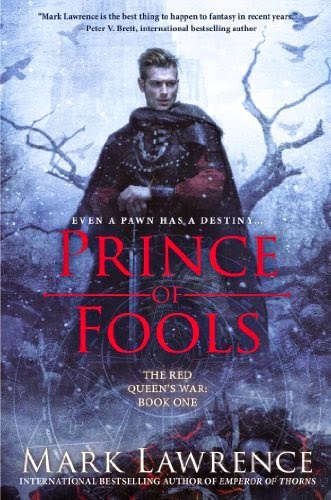
Mark Lawrence's PRINCE OF FOOLS
I absolutely loved Mark Lawrence's Broken Empire trilogy, so there was no way I was not going to dive right into this sidequel pretty damned soon. The world created around the story of Jorg Ancrath begs to be further explored, and Lawrence is a master at creating unique character-narrators to lead one's expeditions. So I had very high expectations heading into Prince of Fools, first of a new series titled The Red Queen's War.
They weren't entirely met, but I didn't really notice that as I was reading, because my expectations were beside the point. Lawrence was revisiting his world but doing so in a completely different way from what I'd come to expect, and doing it brilliantly. So Prince of Fools, for all its familiar settings and cameo appearances by characters from the other books, is very much its own thing, and its sort-of-hero, Prince Jalal Kenreth, is very much his own man. Well, at least as much as Jorg was. I mean, look how problematic Jorg turned out to be!
Jalal, or Jal as he wishes people would not call him, is also problematic, but not quite so much so as was Jorg. Jalal is relatively simple (or at least seems so, so far): he is a self-professed and unapologetic coward, and tells us so clearly and distinctly every few pages. He's proud of what a good coward he is, very good at making fun of what a really almost perfect coward he is, and very entertaining and droll on the general subject of his mastery of the finer points of cowarding.
Except, of course, he isn't. Because one thing that he never seems to have noticed about actual cowards is that they never admit to being cowards. Far from it. They always have very high-flown, high-horse riding reasons for their actions that are actually quite noble and brave and necessary, thank you very much. And if you use the C word in their presence, they might just slap you with a glove and demand you meet them on the field of honor. At which they'll not show up because they had some highfalutin' duty to perform. Yeah, that's it.
No, Jal is really pretty much a hero, but doesn't want that to become known, because then people will expect things of him. Jal, can you rescue this maiden, Jal, can you solve this dilemma, Jal can you fend off this invading army that threatens our very existence, Jal can you marry this homely but rich maiden for the good of the Realm. If there's anything he fears, it's that. Far more pleasant to drink and gamble and whore around, leap from noble bedchamber window to noble bedchamber window to have a go at the sister, etc.
Until plot things happen that bind him magically to a by-gods Viking whose very involved backstory has left him a prisoner of Prince Jal's grandmother, the Red Queen. Said Viking due to be released until Jal gets a load of his overwhelming brawniness and diverts him into the fighting pits instead so that Jal can make some money off him. And then magic.
The tale thus becomes a different kind of road narrative from that we enjoyed with Jorg and his Brotherhood. Jal and Snorri (well, of course the Viking is named Snorri. Read your sagas!) must travel north to do battle with evil forces that have destroyed Snorri's family and realm, forces that he at first just thinks are rival Viking bands but turn out to be closely related to the Big Evil that so warped Jorg's tale and against whom Jal's grandmother and her eerie and witchy Silent Sister are subtly arrayed.
The resulting book is a bit less complex than the Broken Empire books (or at least seems so thus far!), a bit less uncomfortable to enjoy, but compensates for all this by being a lot more fun. Snorri is a hilarious hero straight out of the sagas (he'd sweep all the categories except maybe Outlawry if the guys at the Saga Thing podcast were for some reason to take on this story), whose many notable witticisms manage to keep things amusing even when Jal stops cracking wise as narrator. Their story and the weird magic that binds them is compelling and occasionally hair-raising. There were plenty of undead/necromancy encounters in the Broken Empire books, but the walking dead in Prince of Fools are much scarier, even if they do maybe owe a lot to A Song of Ice & Fire's White Walkers. Or do they?
This is how you do a sidequel, kids. Now I'm seven kinds of psyched for the sequel to the sidequel. Sesidequel? Sedequel?
They weren't entirely met, but I didn't really notice that as I was reading, because my expectations were beside the point. Lawrence was revisiting his world but doing so in a completely different way from what I'd come to expect, and doing it brilliantly. So Prince of Fools, for all its familiar settings and cameo appearances by characters from the other books, is very much its own thing, and its sort-of-hero, Prince Jalal Kenreth, is very much his own man. Well, at least as much as Jorg was. I mean, look how problematic Jorg turned out to be!
Jalal, or Jal as he wishes people would not call him, is also problematic, but not quite so much so as was Jorg. Jalal is relatively simple (or at least seems so, so far): he is a self-professed and unapologetic coward, and tells us so clearly and distinctly every few pages. He's proud of what a good coward he is, very good at making fun of what a really almost perfect coward he is, and very entertaining and droll on the general subject of his mastery of the finer points of cowarding.
Except, of course, he isn't. Because one thing that he never seems to have noticed about actual cowards is that they never admit to being cowards. Far from it. They always have very high-flown, high-horse riding reasons for their actions that are actually quite noble and brave and necessary, thank you very much. And if you use the C word in their presence, they might just slap you with a glove and demand you meet them on the field of honor. At which they'll not show up because they had some highfalutin' duty to perform. Yeah, that's it.
No, Jal is really pretty much a hero, but doesn't want that to become known, because then people will expect things of him. Jal, can you rescue this maiden, Jal, can you solve this dilemma, Jal can you fend off this invading army that threatens our very existence, Jal can you marry this homely but rich maiden for the good of the Realm. If there's anything he fears, it's that. Far more pleasant to drink and gamble and whore around, leap from noble bedchamber window to noble bedchamber window to have a go at the sister, etc.
Until plot things happen that bind him magically to a by-gods Viking whose very involved backstory has left him a prisoner of Prince Jal's grandmother, the Red Queen. Said Viking due to be released until Jal gets a load of his overwhelming brawniness and diverts him into the fighting pits instead so that Jal can make some money off him. And then magic.
The tale thus becomes a different kind of road narrative from that we enjoyed with Jorg and his Brotherhood. Jal and Snorri (well, of course the Viking is named Snorri. Read your sagas!) must travel north to do battle with evil forces that have destroyed Snorri's family and realm, forces that he at first just thinks are rival Viking bands but turn out to be closely related to the Big Evil that so warped Jorg's tale and against whom Jal's grandmother and her eerie and witchy Silent Sister are subtly arrayed.
The resulting book is a bit less complex than the Broken Empire books (or at least seems so thus far!), a bit less uncomfortable to enjoy, but compensates for all this by being a lot more fun. Snorri is a hilarious hero straight out of the sagas (he'd sweep all the categories except maybe Outlawry if the guys at the Saga Thing podcast were for some reason to take on this story), whose many notable witticisms manage to keep things amusing even when Jal stops cracking wise as narrator. Their story and the weird magic that binds them is compelling and occasionally hair-raising. There were plenty of undead/necromancy encounters in the Broken Empire books, but the walking dead in Prince of Fools are much scarier, even if they do maybe owe a lot to A Song of Ice & Fire's White Walkers. Or do they?
This is how you do a sidequel, kids. Now I'm seven kinds of psyched for the sequel to the sidequel. Sesidequel? Sedequel?
Sunday, April 5, 2015
Guy Gavriel Kay's SAILING TO SARANTIUM
There
is a lot of attention to and respect for craft in Canadian fantasist
Guy Gavriel Kay's fiction, and not just as a source of metaphor, though
the tapestries of Fionavar and, here, the mosaics of the
pseudo-Byzantine Sarantine empire, certainly serve as highly effective
over-arching ones for the story structures he's created.
There were, though, no weavers in Fionavar. The tapestry was woven by a god, though not one of the gods who romped and fought and occasionally fornicated in the land -- they had personalities and desires and whims. The Weaver of Fionavar was much more impersonal, not a character.
But in Sailing to Sarantium, while yes, the overall story can be seen as a mosaic created by a divine mosaicist, there is also a real and earthly artisan who is a master of that art, and his story is the main one of this first novel in the Sarantine diptych.
Said artisan is one Crispin, who begins the novel far from the fabled city of Sarantium. Crispin is a Rhodian -- a citizen of this world's western Roman empire after it was sacked by this world's Visigoth analogues* -- and a mosaicist of considerable skill and dedication, if not yet reputation. The reputation is all his partner's, and it is his partner who is invite-commanded by the emperor to come to Sarantium and work on the novel's Hagia Sophia analogue. The partner,though, is old, and tired, and Crispin is merely middle-aged and embittered, so they decide it is he who will go "Sailing to Sarantium" in the novel's idiom for finally getting a shot at the big time, though because the imperial courier dawdled with the message it's too late in the year for safe sailing and so Crispin must travel overland.
So far this sounds about as fantastic as a Lars Brownworth podcast**, and I will just spill the non-fantastical beans here and say that, well, a Clark Ashton Smith story this is not. There is very little magic here, and not much in the way of mythical creatures either -- about as much as you'd see in, say, four or five chapters of A Song of Ice and Fire. But like those books, you're not going to be reading this for the dragons and centaurs and necromancers. You'll read it for the characters and the intricate and crazy court politics and for Crispin's story, the story of an artisan, the kind of guy we can never know any real story about (hence, I posit, the decision to make of this tale a fantasy instead of just a historical novel set in Byzantium. At least in part.) because artisans' names and biographical details did not make the history books until, overall, the Renaissance.
And also because, so far in my experience at least, when Kay writes fantasy, he's interested in exploring one of the more interesting possibilities that the fantasy genre offers: that of examining a world in which religion and its attendant rituals are not matters of mere faith/belief, as they are in our world, but matters of fact. Gods exist and prove their existence by directly interacting with humans (sometimes quite intimately). Ignoring them, to paraphrase Philip K. Dick, does not make them go away. And neglecting to propitiate them has real and tangible consequences that can't be argued about (or at least not much). We saw this in spades in Fionavar; here it's all a bit more subtle. There are pagans still in the Sarantine world, and we get at least one spectacular encounter with the reality of their pantheon and program during Crispin's journey to the great city from the sticks, but there is also a monotheism where, at least in this first novel, no proof is offered. It's all more like ours. It's all about belief.
Which lets Kay explore at one remove the schism between Western and Eastern Christianity that was just really developing in Byzantiume during Justinian's reign. The official religion of the Sarantine empire has sort-of-pagan trappings in that its single deity, Jad, is a sun god, but, just as Christianity was through its history, there's monotheism and there's monotheism. Pagan tugs at believers' heartstrings have some venerating a pantheon of martyrs almost as deeply as the god, and many arguing over whether the deity's incarnated earthly son was or was not as divine as the god itself.
All of this may turn off some readers, but those who have the patience for it are amply rewarded. The theological nitpicking deeply informs some of Crispin's very real and intense experiences, and his plans and visions for his coming triumph, the decoration of the pseudo-Hagia Sophia, which is to be more than a little bit of an assertion of doctrine given form in stone and mortar and prismatically lovely glass tesserae.
As I said, Kay loves exploring craft, and takes it as seriously as fodder for stories as he does his own practice. The care of Crispin for not merely design but construction and composition mirrors Kay's own attention to his craft. The result is as splendid as the dome of Hagia Sophia must have been in Justinian's day.
All this and some crazy action, too. Chariot races! Chariot crashes! Fighting! Sometimes in a bathhouse! And intrigue. So much intrigue. Crispin's arrival upsets many, many applecarts.
A caveat, though; as others have complained, Sailing to Sarantium ends feeling incomplete. Very little is resolved; most is saved for the second volume Lord of Emperors (which I'm already reading, of course). If you're going to read this, then, do yourself a favor and make sure you have the second book ready at hand.
Go, Blues!
*And let's just get this all out of the way and say that, fantasy trappings aside, this novel is basically set in Byzantium in the reign of Justinian and Theodora. All the events of that period are mirrored here, from the Nika riots and Theodora's famous quote about how imperial purple is a good color in which to be buried to the near-eternal conflict between the Blue and Green factions that are really only nominally about the two major colors striving for supremacy in the chariot racing marvel of the Hippodrome (as in the real Byzantium, the two factions also correspond to sides in a religious schism), to the need, after said riots, to rebuild the city and especially its primary religious edifice. It's all so on the nose, but as Byzantium is woefully under-represented in fiction, I happily allow it.
**If you've not listened to the marvelous Twelve Byzantine Rulers, go! Listen! It's glorious! I promise!
There were, though, no weavers in Fionavar. The tapestry was woven by a god, though not one of the gods who romped and fought and occasionally fornicated in the land -- they had personalities and desires and whims. The Weaver of Fionavar was much more impersonal, not a character.
But in Sailing to Sarantium, while yes, the overall story can be seen as a mosaic created by a divine mosaicist, there is also a real and earthly artisan who is a master of that art, and his story is the main one of this first novel in the Sarantine diptych.
Said artisan is one Crispin, who begins the novel far from the fabled city of Sarantium. Crispin is a Rhodian -- a citizen of this world's western Roman empire after it was sacked by this world's Visigoth analogues* -- and a mosaicist of considerable skill and dedication, if not yet reputation. The reputation is all his partner's, and it is his partner who is invite-commanded by the emperor to come to Sarantium and work on the novel's Hagia Sophia analogue. The partner,though, is old, and tired, and Crispin is merely middle-aged and embittered, so they decide it is he who will go "Sailing to Sarantium" in the novel's idiom for finally getting a shot at the big time, though because the imperial courier dawdled with the message it's too late in the year for safe sailing and so Crispin must travel overland.
So far this sounds about as fantastic as a Lars Brownworth podcast**, and I will just spill the non-fantastical beans here and say that, well, a Clark Ashton Smith story this is not. There is very little magic here, and not much in the way of mythical creatures either -- about as much as you'd see in, say, four or five chapters of A Song of Ice and Fire. But like those books, you're not going to be reading this for the dragons and centaurs and necromancers. You'll read it for the characters and the intricate and crazy court politics and for Crispin's story, the story of an artisan, the kind of guy we can never know any real story about (hence, I posit, the decision to make of this tale a fantasy instead of just a historical novel set in Byzantium. At least in part.) because artisans' names and biographical details did not make the history books until, overall, the Renaissance.
And also because, so far in my experience at least, when Kay writes fantasy, he's interested in exploring one of the more interesting possibilities that the fantasy genre offers: that of examining a world in which religion and its attendant rituals are not matters of mere faith/belief, as they are in our world, but matters of fact. Gods exist and prove their existence by directly interacting with humans (sometimes quite intimately). Ignoring them, to paraphrase Philip K. Dick, does not make them go away. And neglecting to propitiate them has real and tangible consequences that can't be argued about (or at least not much). We saw this in spades in Fionavar; here it's all a bit more subtle. There are pagans still in the Sarantine world, and we get at least one spectacular encounter with the reality of their pantheon and program during Crispin's journey to the great city from the sticks, but there is also a monotheism where, at least in this first novel, no proof is offered. It's all more like ours. It's all about belief.
Which lets Kay explore at one remove the schism between Western and Eastern Christianity that was just really developing in Byzantiume during Justinian's reign. The official religion of the Sarantine empire has sort-of-pagan trappings in that its single deity, Jad, is a sun god, but, just as Christianity was through its history, there's monotheism and there's monotheism. Pagan tugs at believers' heartstrings have some venerating a pantheon of martyrs almost as deeply as the god, and many arguing over whether the deity's incarnated earthly son was or was not as divine as the god itself.
All of this may turn off some readers, but those who have the patience for it are amply rewarded. The theological nitpicking deeply informs some of Crispin's very real and intense experiences, and his plans and visions for his coming triumph, the decoration of the pseudo-Hagia Sophia, which is to be more than a little bit of an assertion of doctrine given form in stone and mortar and prismatically lovely glass tesserae.
As I said, Kay loves exploring craft, and takes it as seriously as fodder for stories as he does his own practice. The care of Crispin for not merely design but construction and composition mirrors Kay's own attention to his craft. The result is as splendid as the dome of Hagia Sophia must have been in Justinian's day.
All this and some crazy action, too. Chariot races! Chariot crashes! Fighting! Sometimes in a bathhouse! And intrigue. So much intrigue. Crispin's arrival upsets many, many applecarts.
A caveat, though; as others have complained, Sailing to Sarantium ends feeling incomplete. Very little is resolved; most is saved for the second volume Lord of Emperors (which I'm already reading, of course). If you're going to read this, then, do yourself a favor and make sure you have the second book ready at hand.
Go, Blues!
*And let's just get this all out of the way and say that, fantasy trappings aside, this novel is basically set in Byzantium in the reign of Justinian and Theodora. All the events of that period are mirrored here, from the Nika riots and Theodora's famous quote about how imperial purple is a good color in which to be buried to the near-eternal conflict between the Blue and Green factions that are really only nominally about the two major colors striving for supremacy in the chariot racing marvel of the Hippodrome (as in the real Byzantium, the two factions also correspond to sides in a religious schism), to the need, after said riots, to rebuild the city and especially its primary religious edifice. It's all so on the nose, but as Byzantium is woefully under-represented in fiction, I happily allow it.
**If you've not listened to the marvelous Twelve Byzantine Rulers, go! Listen! It's glorious! I promise!
Labels:
ASOIAF,
Byzantium,
fantasy fiction,
Guy Gavriel Kay,
historical fiction
Sunday, March 8, 2015
Mark Lawrence's EMPEROR OF THORNS
Jorg Ancrath, hero/anti-hero of Mark Lawrence's Broken Empire trilogy (Prince of Thorns, King of Thorns) is all grown up, and more complicated than ever in this final volume, Emperor of Thorns.
And as the title and the cover give away, he's going to achieve his ultimate ambition, of re-uniting the very post-apocalyptic neo-feudal Broken Empire (which is pretty much what is left of Europe plus a chunk of North Africa) under his rule. We've pretty much suspected this was going to happen from the beginning, because Jorg is one ruthless little monster and he always gets what he wants, even if he has to kill people he likes or loves in order to do it.
So the question has always been, not if he will become Emperor, but how. And the how has been a most tantalizing, challenging question, because the traditional way to the Imperial Throne is not unlike that to the throne of the Holy Roman Empire of days gone (very much) by; there is a set of Electors, kings and dukes and lords of the empire's constituent lands, who must come to a consensus on who is to be the boss. If they can't, no emperor. Ususally, they can't, for a number of reasons, chief of them being 1. Instead of just a handful of electors, there are 100 and 2. Since the imperial throne has been empty for over a century, the imperial court is pretty much just a big empty city of ceremony full of officials and functionaries and guardsmen (the imperial guard is the chief sink for the empire's ambitious second and third sons who don't want to become priests), leaving the kings and dukes and lords with most of the real power, which they do not want to give up.
King of Thorns dealt largely with Jorg's ruthlessly clever elimination of his greatest single obstacle to achieving his ultimate ambition, but left our man more unpopular, feared, etc. than ever before. But the Imperial selection process is pretty much a popularity contest. Oh noes!
So lots of Emperor deals with politicking, though not as much as I'd expected. And what there is is pretty indirect-seeming and circuitous; Jorg makes friends chiefly via saving his enemies from bigger and more powerful enemies, meaning ALL THE SUBPLOTS YOU GUYS, but said subplots go a long way toward seriously enriching our understanding of Jorg (again, via a whole chunk of the book taking place "four years ago", still set after all the events of the prior book, but four years earlier than the most immediate narrative of Jorg's pilgrimage to the Imperial City for the vote), who emerges as an even more complicated figure than he already was as the usual transitional events leading to adulthood leave their marks on his already very marked-up self.
The same is true of his world, about the nature of which we learn even more as we follow Jorg's progress through it; not only in terms of its geography and inhabitants, but of its nature as a post-apocalyptic feudal mess, still littered with "Builder" technology and artifiacts and, as we learned in the second novel, haunted by Builder ghosts.
And yes, by the end of Emperor, the urge to go back and re-read from the beginning is strong; you will have a completely different understanding of the driving forces of Jorg's life and character and probably have a different take on the narrative itself.
And yes, the ending is satisfying in almost all of the ways we want it to be, and the way that it isn't is just fine, really, because one of the major points of Jorg's story is the hollowness of vengeance, after all. Bad things happen; punishing the baddies doesn't make them un-happen, it just uses up a lot of your time and energy that are better spent pursuing more important goals.
Magnificent!
And as the title and the cover give away, he's going to achieve his ultimate ambition, of re-uniting the very post-apocalyptic neo-feudal Broken Empire (which is pretty much what is left of Europe plus a chunk of North Africa) under his rule. We've pretty much suspected this was going to happen from the beginning, because Jorg is one ruthless little monster and he always gets what he wants, even if he has to kill people he likes or loves in order to do it.
So the question has always been, not if he will become Emperor, but how. And the how has been a most tantalizing, challenging question, because the traditional way to the Imperial Throne is not unlike that to the throne of the Holy Roman Empire of days gone (very much) by; there is a set of Electors, kings and dukes and lords of the empire's constituent lands, who must come to a consensus on who is to be the boss. If they can't, no emperor. Ususally, they can't, for a number of reasons, chief of them being 1. Instead of just a handful of electors, there are 100 and 2. Since the imperial throne has been empty for over a century, the imperial court is pretty much just a big empty city of ceremony full of officials and functionaries and guardsmen (the imperial guard is the chief sink for the empire's ambitious second and third sons who don't want to become priests), leaving the kings and dukes and lords with most of the real power, which they do not want to give up.
King of Thorns dealt largely with Jorg's ruthlessly clever elimination of his greatest single obstacle to achieving his ultimate ambition, but left our man more unpopular, feared, etc. than ever before. But the Imperial selection process is pretty much a popularity contest. Oh noes!
So lots of Emperor deals with politicking, though not as much as I'd expected. And what there is is pretty indirect-seeming and circuitous; Jorg makes friends chiefly via saving his enemies from bigger and more powerful enemies, meaning ALL THE SUBPLOTS YOU GUYS, but said subplots go a long way toward seriously enriching our understanding of Jorg (again, via a whole chunk of the book taking place "four years ago", still set after all the events of the prior book, but four years earlier than the most immediate narrative of Jorg's pilgrimage to the Imperial City for the vote), who emerges as an even more complicated figure than he already was as the usual transitional events leading to adulthood leave their marks on his already very marked-up self.
The same is true of his world, about the nature of which we learn even more as we follow Jorg's progress through it; not only in terms of its geography and inhabitants, but of its nature as a post-apocalyptic feudal mess, still littered with "Builder" technology and artifiacts and, as we learned in the second novel, haunted by Builder ghosts.
And yes, by the end of Emperor, the urge to go back and re-read from the beginning is strong; you will have a completely different understanding of the driving forces of Jorg's life and character and probably have a different take on the narrative itself.
And yes, the ending is satisfying in almost all of the ways we want it to be, and the way that it isn't is just fine, really, because one of the major points of Jorg's story is the hollowness of vengeance, after all. Bad things happen; punishing the baddies doesn't make them un-happen, it just uses up a lot of your time and energy that are better spent pursuing more important goals.
Magnificent!
Wednesday, February 25, 2015
Guy Gavriel Kay's YSABEL
Guy Gavriel Kay's trilogy, the Fionavar Tapestry, ended very satisfyingly and completely, wrapping up pretty much for good that realm's big story. But I'd heard there was a sequel of sorts anyway and my skeptical eyebrow shot up. Stupid eyebrow.
Ysabel is and isn't that sequel; its being a sequel only in that we get to see what became of the two Toronto characters who were the only ones of the Five that chose to return to our world after the Tapestry trilogy's events concluded. They're not super important to the plot of Ysabel, so I'm not going to name them and just avoid any chance of spoilers; I'll just say it was nice to see them again and get a bit more of what their lives had been like before and were like after those other books took place.
Ysabel takes place entirely in our own world, in the actual south of France that inspired Kay's other creation that I've loved, Arbonne, but very much in the 21st century. Which is to say that, yes, Ysabel is kind of Kay's foray into "urban fantasy" except it takes place mostly in the gorgeous French countryside and its many fine examples of Celtic and Greco-Roman ruins and holy sites. And yes, the gorgeous comes through in this book; this is Guy Gavriel Kay.
The story concerns a Canadian teenager, Ned, who is spending the spring in Provence while his world-famous photographer father and his retinue work on gathering images for the next great coffee table book. Left to his own devices, he has the amusing (but even he admits to himself not terribly original) idea to listen to Led Zeppelin's Houses of the Holy while exploring an actual French cathedral. Before you can say "Over the Hills and Far Away" though, Ned has met two people who are going to completely mess up his plans: a cute and geeky teenage girl from New York named Kate (hooray!) and a weird sinister stranger who says weird sinister things and leaves both of the kids way more curious than he meant to -- or than is good for them.
And thus our teens get dragged into the re-enactment of the city of Marseilles' founding myth. And I'm not talking about a LARP. It's almost Beltane, see, and every once in a while the old unquiet spirits of the region take advantage of the power such nights kick up to come back and have another go at each other. Two such are bitter lives-long enemies from the original clash of Celtic and Greek cultures that kicked off a great deal of European civilization; another such is the woman they both love, who loves them both, and over whom they fought centuries ago. All very well and good, and who wouldn't want to meet such legendary people, even if they're a bit dangerous.
Ah but there's a catch. The men can just drag themselves back by their mythical/spiritual bootstraps, but because of REASONS the woman has to possess a living woman. And a living woman, the young and spritely and very well organized Melanie, is the brains behind Ned's dad's traveling photographic circus. Oops.
The rest of the story proceeds more or less as one might expect, a bit of a disappointment after all of the surprises and turns I've come to expect from Kay after visiting Arbonne and Fionavar. I'm not sure if Ysabel was intended as young adult fiction (but no parent should be troubled to let his or her young adult read this, and hey, the kids are at the center of the story at all times), but perhaps it was and Kay pulled some punches? At any rate, it's still a good book, better than a lot of the fantasy that's out there, and still elegantly written and emotionally powerful. It's just less so. But that's all right.
I'm excited to try his sort-of-Byzantine and sort-of-Spain and sort-of-China books in the near future. Especially the former. I loves me some Byzantium.
Ysabel is and isn't that sequel; its being a sequel only in that we get to see what became of the two Toronto characters who were the only ones of the Five that chose to return to our world after the Tapestry trilogy's events concluded. They're not super important to the plot of Ysabel, so I'm not going to name them and just avoid any chance of spoilers; I'll just say it was nice to see them again and get a bit more of what their lives had been like before and were like after those other books took place.
Ysabel takes place entirely in our own world, in the actual south of France that inspired Kay's other creation that I've loved, Arbonne, but very much in the 21st century. Which is to say that, yes, Ysabel is kind of Kay's foray into "urban fantasy" except it takes place mostly in the gorgeous French countryside and its many fine examples of Celtic and Greco-Roman ruins and holy sites. And yes, the gorgeous comes through in this book; this is Guy Gavriel Kay.
The story concerns a Canadian teenager, Ned, who is spending the spring in Provence while his world-famous photographer father and his retinue work on gathering images for the next great coffee table book. Left to his own devices, he has the amusing (but even he admits to himself not terribly original) idea to listen to Led Zeppelin's Houses of the Holy while exploring an actual French cathedral. Before you can say "Over the Hills and Far Away" though, Ned has met two people who are going to completely mess up his plans: a cute and geeky teenage girl from New York named Kate (hooray!) and a weird sinister stranger who says weird sinister things and leaves both of the kids way more curious than he meant to -- or than is good for them.
And thus our teens get dragged into the re-enactment of the city of Marseilles' founding myth. And I'm not talking about a LARP. It's almost Beltane, see, and every once in a while the old unquiet spirits of the region take advantage of the power such nights kick up to come back and have another go at each other. Two such are bitter lives-long enemies from the original clash of Celtic and Greek cultures that kicked off a great deal of European civilization; another such is the woman they both love, who loves them both, and over whom they fought centuries ago. All very well and good, and who wouldn't want to meet such legendary people, even if they're a bit dangerous.
Ah but there's a catch. The men can just drag themselves back by their mythical/spiritual bootstraps, but because of REASONS the woman has to possess a living woman. And a living woman, the young and spritely and very well organized Melanie, is the brains behind Ned's dad's traveling photographic circus. Oops.
The rest of the story proceeds more or less as one might expect, a bit of a disappointment after all of the surprises and turns I've come to expect from Kay after visiting Arbonne and Fionavar. I'm not sure if Ysabel was intended as young adult fiction (but no parent should be troubled to let his or her young adult read this, and hey, the kids are at the center of the story at all times), but perhaps it was and Kay pulled some punches? At any rate, it's still a good book, better than a lot of the fantasy that's out there, and still elegantly written and emotionally powerful. It's just less so. But that's all right.
I'm excited to try his sort-of-Byzantine and sort-of-Spain and sort-of-China books in the near future. Especially the former. I loves me some Byzantium.
Friday, February 13, 2015
Mark Lawrence's KING OF THORNS
When I wrote earlier this month about the first volume in Mark Lawrence's Broken Empire series, Prince of Thorns, I made some comparison to Gene Wolfe's Book of the New Sun, but said that Lawrence's grimly unlikeable antihero was a much more reliable narrator than Severian.
As I've finished the second novel in the series, King of Thorns, I find I need to retract that statement somewhat. Jorg isn't always telling the truth as he leads us through the layers of his story, but I'm not sure his intent is to deceive anyone so much as to discover himself what is true, of what he is actually guilty, whose motivations he has actually acted upon, what manner of character he really possesses. It's really, really complicated. Deliciously so.
As the novel opens, Jorg has been king of the little nation he wrested from his uncle (the guy who had Jorg's mother and little brother killed. Or probably the guy) for several years and is getting married to a slip of a girl who seems like a bit of a simp but turns out to be anything but. Meanwhile, his little kingdom is under an enormous assault, being attacked and invaded by something along the order of 20,000 men under the command of a destiny-driven knight in shining armor, the Prince of Arrow, who is an almost perfect foil to Jorg in that everybody loves him and for good reason -- he is everything a royal should be, accomplished, daring, fair, kind, good, noble, handsome, trustworthy. And prophesied to unite again the Broken Empire of 100 Kingdoms that once dominated Europe in the years between the nuclear apocalypse that turned our world into Jorg's and Jorg's own time.
Oh, and Jorg is going to have to fight off -- or bend the knee to -- the Prince of Arrow on his very wedding day. And if he fights, he only has 300 men or so. Yes, he addresses the whole Thermopylae thing. A very well-read young man is our narrator Jorg.
But don't worry! He has a plan! Only, sort of Doctor Who style, he doesn't know it! Because like in the last novel, Jorg is still beset by subtle, sneaky, nasty wizards who can manipulate men's minds as well as reading them. But he found a way to beat that nasty subtle wizardry, oh yes! He found a wizard of his own who could cherry pick and remove Jorg's memories and seal them in a little metal box that is impervious to the workings of Jorg's magical foes! Jorg can judiciously access these a little at a time, but only a little. This results in a lot of Bill and Ted type shenanigans in which Jorg and his men are constantly stumbling across amazingly helpful things by surprise as Jorg's deliciously complex and devious defense scheme plays out. Joy!
So see, much of the time we've been reading Jorg, we've only been reading bits of Jorg, because he's hidden so much even from himself, and thus from us. He's working from a heavily redacted script, and drawing many false conclusions about his role thereby. It's absolutely fascinating.
So after two novels, I'm no longer sure exactly how detestable Jorg really is. Oh, he's still plenty brutal and spends lives like Napoleon and is still hell-bent on revenge and is an amazing killing machine, but it seems that some of his most heinous deeds might not really be layable at his door. Then again, they yet may.
This all unfolds again in multiple time frames and multiple layers. In addition to the wedding day battle plot, we again follow a parallel narrative from four years before, when King Jorg hit the road with what's left of his brothers and toured his world, gathering allies here, re-encountering old foes there, losing brothers, gaining powers, and exploring in greater detail the origins of this strange semi-fantastic semi-science-fictional world of his. The careful reader will pick up lots of hints as to Jorg's deliberately-forgotten battle plans as well as develop a more complex picture of what Jorg's all about.
And then there's a scene between Jorg and his step-aunt, Katherine, with whom he has an obsession that is almost romantic but definitely sexual, most of which is part and parcel of the memories he had removed from his head and stored in his box to unfold piece by piece along with his strategy. Thus the relationship between Jorg and Katherine is also subject to reinterpretation. Deliciously so.
And then there is a narrative from Katherine's point of view, told in snippets from her diaries. For much of the book, these feel kind of unnecessary and unsuccessful, but they lend tremendous weight to the novel's final revelations as the stage is set for Jorg's run for the imperial thorne, to be detailed in the last book of the trilogy, Emperor of Thorns, which of course I'll be reading very, very soon. Deliciously so, I am sure.
As I've finished the second novel in the series, King of Thorns, I find I need to retract that statement somewhat. Jorg isn't always telling the truth as he leads us through the layers of his story, but I'm not sure his intent is to deceive anyone so much as to discover himself what is true, of what he is actually guilty, whose motivations he has actually acted upon, what manner of character he really possesses. It's really, really complicated. Deliciously so.
As the novel opens, Jorg has been king of the little nation he wrested from his uncle (the guy who had Jorg's mother and little brother killed. Or probably the guy) for several years and is getting married to a slip of a girl who seems like a bit of a simp but turns out to be anything but. Meanwhile, his little kingdom is under an enormous assault, being attacked and invaded by something along the order of 20,000 men under the command of a destiny-driven knight in shining armor, the Prince of Arrow, who is an almost perfect foil to Jorg in that everybody loves him and for good reason -- he is everything a royal should be, accomplished, daring, fair, kind, good, noble, handsome, trustworthy. And prophesied to unite again the Broken Empire of 100 Kingdoms that once dominated Europe in the years between the nuclear apocalypse that turned our world into Jorg's and Jorg's own time.
Oh, and Jorg is going to have to fight off -- or bend the knee to -- the Prince of Arrow on his very wedding day. And if he fights, he only has 300 men or so. Yes, he addresses the whole Thermopylae thing. A very well-read young man is our narrator Jorg.
But don't worry! He has a plan! Only, sort of Doctor Who style, he doesn't know it! Because like in the last novel, Jorg is still beset by subtle, sneaky, nasty wizards who can manipulate men's minds as well as reading them. But he found a way to beat that nasty subtle wizardry, oh yes! He found a wizard of his own who could cherry pick and remove Jorg's memories and seal them in a little metal box that is impervious to the workings of Jorg's magical foes! Jorg can judiciously access these a little at a time, but only a little. This results in a lot of Bill and Ted type shenanigans in which Jorg and his men are constantly stumbling across amazingly helpful things by surprise as Jorg's deliciously complex and devious defense scheme plays out. Joy!
So see, much of the time we've been reading Jorg, we've only been reading bits of Jorg, because he's hidden so much even from himself, and thus from us. He's working from a heavily redacted script, and drawing many false conclusions about his role thereby. It's absolutely fascinating.
So after two novels, I'm no longer sure exactly how detestable Jorg really is. Oh, he's still plenty brutal and spends lives like Napoleon and is still hell-bent on revenge and is an amazing killing machine, but it seems that some of his most heinous deeds might not really be layable at his door. Then again, they yet may.
This all unfolds again in multiple time frames and multiple layers. In addition to the wedding day battle plot, we again follow a parallel narrative from four years before, when King Jorg hit the road with what's left of his brothers and toured his world, gathering allies here, re-encountering old foes there, losing brothers, gaining powers, and exploring in greater detail the origins of this strange semi-fantastic semi-science-fictional world of his. The careful reader will pick up lots of hints as to Jorg's deliberately-forgotten battle plans as well as develop a more complex picture of what Jorg's all about.
And then there's a scene between Jorg and his step-aunt, Katherine, with whom he has an obsession that is almost romantic but definitely sexual, most of which is part and parcel of the memories he had removed from his head and stored in his box to unfold piece by piece along with his strategy. Thus the relationship between Jorg and Katherine is also subject to reinterpretation. Deliciously so.
And then there is a narrative from Katherine's point of view, told in snippets from her diaries. For much of the book, these feel kind of unnecessary and unsuccessful, but they lend tremendous weight to the novel's final revelations as the stage is set for Jorg's run for the imperial thorne, to be detailed in the last book of the trilogy, Emperor of Thorns, which of course I'll be reading very, very soon. Deliciously so, I am sure.
Saturday, February 7, 2015
Guy Gavriel Kay's FIONAVAR TAPESTRY
This post is going to concern itself with not one but three books, because once I'd finished the first volume of Guy Gavriel Kay's Fionavar Tapestry trilogy, The Summer Tree, I immediately plunged into its sequel, The Wandering Fire, and when I finished that (in a little over a day and a sleepless night), I plunged immediately into the concluding The Darkest Road and then I had a good cry but did not wish for more because everything wrapped up so satisfyingly that I did not need more.
This pretty much never happens. Especially with epic/high fantasy, a genre for which my lack of love is pretty well known.* Hey, I'm as surprised as you are (though my love for Kay's A Song for Arbonne should have given us all a clue, I do suppose). And yet right now, I'm happily also in the middle of that Broken Empire stuff, too. It pays sometimes to ignore your prejudices, eh wot?
Anyway, I started off, a week or so ago, prepared not to like this one so much. Alarm bells started ringing right away as I settled down to read the first book, which starts off with a lengthy and detailed dramatis personae, a thing that always makes me roll my eyes because it so often suggests to me that either someone doesn't trust me enough to keep track of all the characters contained in the story such a list precedes, or someone's publishers don't think the author did a good enough job making said characters vivid and distinct enough for anyone to be able to keep track without a handy guide. Either way, my hackles go up, and yes, I had the same eyebrow raising experience the first time I cracked open Dorothy Dunnett, but her books are so damned intricate and complex that those lists turn out to be (occasionally) necessary even for an attentive reader because hundreds of pages sometimes go by between encounters with some characters in Dunnett, oh yes. But Dunnett has been an exception for me in this, as in so many regards.
Guy Garviel Kay, turns out, is another. Except I didn't need, ever, to refer to the dramatis personae, because as in Arbonne, so in Fionavar (to which I'd seen a reference in Arbonne as "Fionvarre" and had been wondering about since, to my happiness): Kay's characters, both his own creations and those he borrows from mythology and legend, are alive and distinct and unforgettable and captivating. As is their world, their struggle, their story.
The trilogy's focus is on five of them, more or less, young university students who come from our world (and from Toronto, my very favorite city), who attend together a lecture on Celtic myth by a world-famous expert and then find themselves whisked into said expert's company after the lecture under the guise of showing him a much better time than would all those dreary academics who are expecting him at their post-lecture do. But it is the lecturer, who turns out to be a powerful mage from another world named Loren Silvercloak (and yes, that name gagged me at first, as so many names in the d.p. gagged me, because I hate epic fantasy, remember?), who whisks them away -- to another world, where they are "needed" as ceremonial guests for a king's golden jubilee. By magic, he and his "source"**, a dwarf named Matt Soren, transport the five to Fionavar, the first of all worlds, kind of like C.S. Lewis' Aslan's Country, the world of which all other worlds are just sort of imperfect copies echoing its motifs and patterns.***
And then it turns out, of course, that the Five -- handsome, playful, emotional Kevin; helpful, kind, wise Kimberly; wounded, stand-offish, moody Paul; beautiful, proud Jennifer; and big, strong oddball Dave -- aren't just there for a party. There are roles and very important work for all of them to fulfill in Fionavar, if they're willing, or maybe even if they're not.
And those roles are deeply archetypal, a Jungian parade of quests and tasks and ritual enactments and sacrifices that could all get so hokey, so in-your-ribs and on-the-nose, but don't because Guy Gavriel Kay is some kind of wizard. Even someone who knows the archetypes he's playing with very, very well has surprises in store for her, reading these novels. They might not be plot surprises per se, for such a reader; the surprise is how deeply felt and emotional these developments can be, how necessary they are to make the overall story work, and how they raise lumps in the throat, make tears sting in the eyes such that one could all but short out her ebook reader. Excuse me for a moment.
And yes, the girls' stories matter just as much as, sometimes more than, they boys', and no, it's not because the girls strap on boobplates and are suddenly strong enough to wield giant claymores or because they develop preternatural skills at archery or in any way, really, do anything remotely like what the boys do. Kay laughs at the Bechdel test. Kay understands women and men and honors them both. Kay writes people. Extraordinarily.
And he writes extraordinary fight scenes, including one single battle between a larger-than-life hero and a giant unkillable demon that goes on for some ten pages and is riveting not just for the well-described action but for the scene's staggering emotional content, deft shifts of point of view, and barely-hinted at future importance. As I said over on Goodreads after finishing that scene, "Jesustitsfucksake, Lancelot!"
Yes, that Lancelot. Arthur and Cavall are in this, too, drawn in from their eternal twilight afterlife just as Kevin and Kim and Paul and Jennifer and Dave were from theirs, but not quite given their interiority. Kay knows well enough to leave his most archetypal characters as just that, archetypes, icons, who nonetheless are integral parts of this story and who interact with Kay's own characters in a myriad of ways without in any way ceasing to be icons to be regarded with awe and reverence. Neat trick, that.
I'm still in awe myself from the experience of reading these books. And this is a trilogy with a flying unicorn in it, for Pete's sake.
Yes, boys and girls, a high fantasy trilogy with a flying unicorn made me cry. Go outside and check the skies for falling crabs and periwinkles.
And read these books, if you haven't.
*Nor are those detailed in that sonnet the only reasons I generally roll my eyes at the genre, as I'm sure my long-term readers figured out long ago, and as I'm sure I've made even more clear in this post.
**I'm not going to get into the details here, but magic in Fionavar is different, yo. As in it takes two, a mage and a second person who is the source of his energy, to do it. And the relationship between a mage and his source is a powerful one even when they are not already otherwise best friends or lovers or both or all of the above, i.e. it's quite fraught.
***Look, the trilogy is referred to as a tapestry. So much weaving/fibercraft metaphor in this. So much.
This pretty much never happens. Especially with epic/high fantasy, a genre for which my lack of love is pretty well known.* Hey, I'm as surprised as you are (though my love for Kay's A Song for Arbonne should have given us all a clue, I do suppose). And yet right now, I'm happily also in the middle of that Broken Empire stuff, too. It pays sometimes to ignore your prejudices, eh wot?
Anyway, I started off, a week or so ago, prepared not to like this one so much. Alarm bells started ringing right away as I settled down to read the first book, which starts off with a lengthy and detailed dramatis personae, a thing that always makes me roll my eyes because it so often suggests to me that either someone doesn't trust me enough to keep track of all the characters contained in the story such a list precedes, or someone's publishers don't think the author did a good enough job making said characters vivid and distinct enough for anyone to be able to keep track without a handy guide. Either way, my hackles go up, and yes, I had the same eyebrow raising experience the first time I cracked open Dorothy Dunnett, but her books are so damned intricate and complex that those lists turn out to be (occasionally) necessary even for an attentive reader because hundreds of pages sometimes go by between encounters with some characters in Dunnett, oh yes. But Dunnett has been an exception for me in this, as in so many regards.
Guy Garviel Kay, turns out, is another. Except I didn't need, ever, to refer to the dramatis personae, because as in Arbonne, so in Fionavar (to which I'd seen a reference in Arbonne as "Fionvarre" and had been wondering about since, to my happiness): Kay's characters, both his own creations and those he borrows from mythology and legend, are alive and distinct and unforgettable and captivating. As is their world, their struggle, their story.
The trilogy's focus is on five of them, more or less, young university students who come from our world (and from Toronto, my very favorite city), who attend together a lecture on Celtic myth by a world-famous expert and then find themselves whisked into said expert's company after the lecture under the guise of showing him a much better time than would all those dreary academics who are expecting him at their post-lecture do. But it is the lecturer, who turns out to be a powerful mage from another world named Loren Silvercloak (and yes, that name gagged me at first, as so many names in the d.p. gagged me, because I hate epic fantasy, remember?), who whisks them away -- to another world, where they are "needed" as ceremonial guests for a king's golden jubilee. By magic, he and his "source"**, a dwarf named Matt Soren, transport the five to Fionavar, the first of all worlds, kind of like C.S. Lewis' Aslan's Country, the world of which all other worlds are just sort of imperfect copies echoing its motifs and patterns.***
And then it turns out, of course, that the Five -- handsome, playful, emotional Kevin; helpful, kind, wise Kimberly; wounded, stand-offish, moody Paul; beautiful, proud Jennifer; and big, strong oddball Dave -- aren't just there for a party. There are roles and very important work for all of them to fulfill in Fionavar, if they're willing, or maybe even if they're not.
And those roles are deeply archetypal, a Jungian parade of quests and tasks and ritual enactments and sacrifices that could all get so hokey, so in-your-ribs and on-the-nose, but don't because Guy Gavriel Kay is some kind of wizard. Even someone who knows the archetypes he's playing with very, very well has surprises in store for her, reading these novels. They might not be plot surprises per se, for such a reader; the surprise is how deeply felt and emotional these developments can be, how necessary they are to make the overall story work, and how they raise lumps in the throat, make tears sting in the eyes such that one could all but short out her ebook reader. Excuse me for a moment.
And yes, the girls' stories matter just as much as, sometimes more than, they boys', and no, it's not because the girls strap on boobplates and are suddenly strong enough to wield giant claymores or because they develop preternatural skills at archery or in any way, really, do anything remotely like what the boys do. Kay laughs at the Bechdel test. Kay understands women and men and honors them both. Kay writes people. Extraordinarily.
And he writes extraordinary fight scenes, including one single battle between a larger-than-life hero and a giant unkillable demon that goes on for some ten pages and is riveting not just for the well-described action but for the scene's staggering emotional content, deft shifts of point of view, and barely-hinted at future importance. As I said over on Goodreads after finishing that scene, "Jesustitsfucksake, Lancelot!"
Yes, that Lancelot. Arthur and Cavall are in this, too, drawn in from their eternal twilight afterlife just as Kevin and Kim and Paul and Jennifer and Dave were from theirs, but not quite given their interiority. Kay knows well enough to leave his most archetypal characters as just that, archetypes, icons, who nonetheless are integral parts of this story and who interact with Kay's own characters in a myriad of ways without in any way ceasing to be icons to be regarded with awe and reverence. Neat trick, that.
I'm still in awe myself from the experience of reading these books. And this is a trilogy with a flying unicorn in it, for Pete's sake.
Yes, boys and girls, a high fantasy trilogy with a flying unicorn made me cry. Go outside and check the skies for falling crabs and periwinkles.
And read these books, if you haven't.
*Nor are those detailed in that sonnet the only reasons I generally roll my eyes at the genre, as I'm sure my long-term readers figured out long ago, and as I'm sure I've made even more clear in this post.
**I'm not going to get into the details here, but magic in Fionavar is different, yo. As in it takes two, a mage and a second person who is the source of his energy, to do it. And the relationship between a mage and his source is a powerful one even when they are not already otherwise best friends or lovers or both or all of the above, i.e. it's quite fraught.
***Look, the trilogy is referred to as a tapestry. So much weaving/fibercraft metaphor in this. So much.
Labels:
Dorothy Dunnett,
epic fantasy,
fantasy,
favorites,
Guy Gavriel Kay
Subscribe to:
Posts (Atom)